The Technical Advisory Group on SARS-CoV-2 Virus Evolution (TAG-VE) is a free gathering of specialists that intermittently screens and assesses the advancement of SARS-CoV-2 and surveys in case explicit transformations and blends of changes modify the conduct of the infection. The TAG-VE was met on 26 November 2021 to evaluate the SARS-CoV-2 variation: B.1.1.529.
The B.1.1.529 variation was first answered to WHO from South Africa on 24 November 2021. The epidemiological circumstance in South Africa has been portrayed by three particular tops in revealed cases, the most recent of which was prevalently the Delta variation. As of late, contaminations have expanded steeply, harmonizing with the identification of B.1.1.529 variation. The initially known affirmed B.1.1.529 contamination was from an example gathered on 9 November 2021.
This variation has countless transformations, some of which are unsettling. Fundamental proof recommends an expanded danger of reinfection with this variation, when contrasted with other VOCs. The quantity of instances of this variation gives off an impression of being expanding in practically all regions in South Africa. Current SARS-CoV-2 PCR diagnostics keep on distinguishing this variation. A few labs have demonstrated that for one broadly utilized PCR test, one of the three objective qualities isn’t identified (called S quality dropout or S quality objective disappointment) and this test can subsequently be utilized as marker for this variation, forthcoming sequencing affirmation. Utilizing this methodology, this variation has been recognized at quicker rates than past floods in disease, recommending that this variation might have a development advantage.
There are various examinations in progress and the TAG-VE will keep on assessing this variation. WHO will discuss new discoveries with Member States and to people in general on a case by case basis.
In light of the proof introduced demonstrative of an unfavorable change in COVID-19 the study of disease transmission, the TAG-VE has prompted WHO that this variation ought to be assigned as a VOC, and the WHO has assigned B.1.1.529 as a VOC, named Omicron.
Accordingly, nations are approached to do the accompanying:
upgrade observation and sequencing endeavors to more readily comprehend flowing SARS-CoV-2 variations.
submit total genome groupings and related metadata to an openly accessible data set, like GISAID.
report introductory cases/groups related with VOC disease to WHO through the IHR system.
where limit exists and as a team with the global local area, perform field examinations and research center appraisals to work on comprehension of the likely effects of the VOC on COVID-19 the study of disease transmission, seriousness, viability of general wellbeing and social measures, analytic techniques, safe reactions, neutralizer balance, or other pertinent qualities.
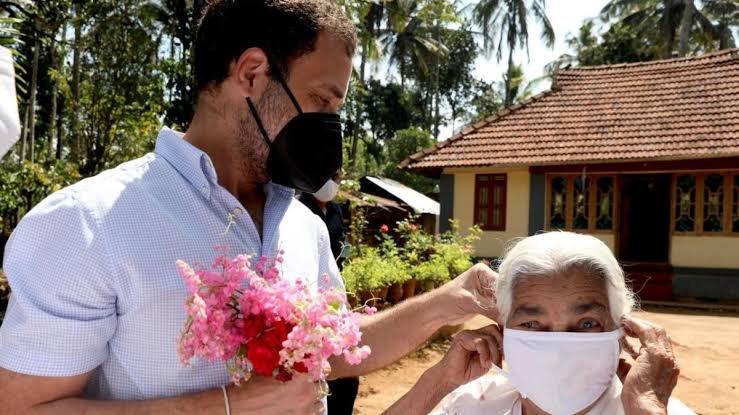
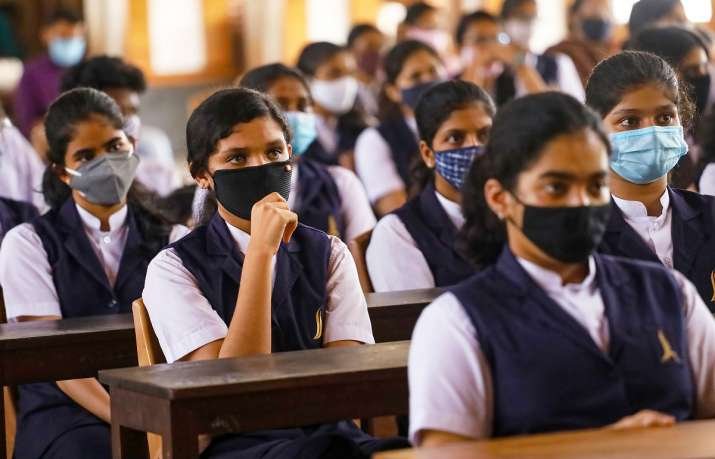
People are reminded to go to lengths to diminish their danger of COVID-19, including demonstrated general wellbeing and social measures like wearing great fitting covers, hand cleanliness, physical separating, further developing ventilation of indoor spaces, keeping away from swarmed spaces, and getting immunized.
For reference, WHO has working definitions for SARS-CoV-2 Variant of Interest (VOI) and Variant of Concern (VOC).
A SARS-CoV-2 VOI is a SARS-CoV-2 variation:
with hereditary changes that are anticipated or referred to influence infection attributes like contagiousness, sickness seriousness, invulnerable departure, analytic or restorative getaway; AND
that has been recognized as causing huge local area transmission or numerous COVID-19 bunches, in different nations with expanding relative pervasiveness close by expanding number of cases over the long haul, or other obvious epidemiological effects on propose an arising hazard to worldwide general wellbeing.
A SARS-CoV-2 VOC is a SARS-CoV-2 variation that meets the meaning of a VOI (see above) and, through a relative appraisal, has been shown to be related with at least one of the accompanying changes at a level of worldwide general wellbeing importance:
expansion in contagiousness or inconvenient change in COVID-19 the study of disease transmission; OR
expansion in destructiveness or change in clinical infection show; OR
decline in viability of general wellbeing and social measures or accessible diagnostics, antibodies, therapeutics